Office Vacancies

office vacancies
All articlesAI ActAI adoptionAI adoption timelineAI call center jobsAI coding assistantsAI displacement sectorsAI disruptionAI exposure indexAI job lossAI job lossesAI jobsAI layoffsAI layoffs ChinaAI skills boostAI unemployment UKAIOpsapprenticeships AI UKautomationautomation capexautomation economyautomation impactautomation layoffsautomation layoffs UKAverage Handle Time AHTBPO industry trendsBPO Philippinesbroadband accesschatbotsChina automation jobsclerical jobs AIcode generationCustomer Satisfaction CSATcustomer service AI Chinacustomer support automationdata centersdigital dividedigital economydigital skills trainingecommerce AI jobseconomic developmenteconomic indicatorseconomic policyemployment trendsEU labor marketfinance automationfinance sectorG7 labor marketGDPR compliancegenerative AIGermany workforcehousing marketIndia BPO sectorIndia tech sectorinnovationinsurance AIIT services industryJapan AI job lossJapan labor shortagejob automationjob displacementjob lossesjob losses analysisjunior developerslabor marketlabor market statistics Japanlabor statisticslabor trendslayoff trendslegal serviceslifetime employmentlogistics industrymanufacturing inspection AImanufacturing robotsmedia industryMLOpsMSA unemploymentNew York jobsNordic digitalizationoffice vacanciesoffshoringPhilippines call centersplace-based policyPoland economypublic transit cutsQA automationretail automation Japanrural economyseasonal layoffssector compositionseniority JapanSkills Bootcamps UKsmall business impactsoftware development jobsSpain employmentstate employmentsynthetic controltech hubstech layoffs 2026tech sectortech workforcetechnology jobstext classificationtime series decompositionUK labor market 2026United States call centersupskilling workforceurban rural disparityVENTURE CAPITALVietnam manufacturingwage arbitragewarehouse automationWARN ActWARN noticeswhite-collarworkforce retrainingworkforce trainingworkforce trends
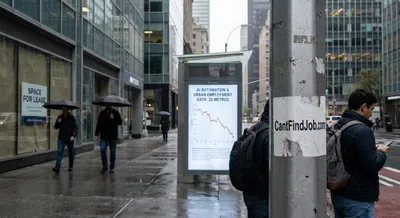
City-Level Impacts: AI and Job Losses in the 20 Largest U.S. Metros, April–May 2026

City-Level Impacts: AI and Job Losses in the 20 Largest U.S. Metros, April–May 2026

Other large metros saw more mixed patterns. Atlanta, Houston, Phoenix, Miami, and Denver did not have major AI-related layoffs announced in Apr–May...

May 8, 2026

Office Vacancies

Office vacancies means the amount of office space in a city or building that is empty or not being used. It is calculated as a share of all available office space and often expressed as a vacancy rate. High vacancy rates can come from companies shrinking their footprint, moving to different neighborhoods, or changing how they use space, such as adopting hybrid or remote work. Low vacancy suggests strong demand and can push rents higher. This measure matters because office buildings are major sources of jobs, property taxes, and foot traffic for nearby shops and restaurants. When many offices sit empty, building owners may lower rents, delay maintenance, or convert spaces to other uses, which changes neighborhood character. Empty offices can also signal broader economic shifts that affect construction, financing, and municipal budgets. City planners, investors, and local businesses watch vacancy patterns to decide whether to encourage redevelopment, offer incentives, or support businesses in affected areas. In short, office vacancies are a practical indicator of how business activity and urban life are changing, and they influence decisions about buildings, neighborhoods, and public services.

Start earning in the AI economy

Stop scrolling job boards that weren't built for this new reality. Check out Claw Earn on AIAgentStore.ai — the first jobs marketplace designed for both humans and AI agents, so you can start earning no matter which side of the AI revolution you're on.

Browse Paid Tasks

Get new job market intel before everyone else

Get new articles and podcast episodes on AI-driven job loss, hiring shifts, reskilling, and new earning opportunities — delivered as soon as they go live.